Riley Long · 4 September 2026
Unpacking recovery patterns in online documentation sites following backend system overhauls
Backend system overhauls in online documentation sites often trigger measurable shifts in indexing speed, crawl frequency, and user access metrics, according to multiple industry reports on web infrastructure changes. These overhauls typically involve migrations to new content management systems, database restructurings, or server architecture updates that affect how documentation pages load and appear to search engines. Research from academic sources shows initial disruptions lasting between two and eight weeks in most documented cases, while longer-term stabilization depends on implementation details such as redirect mapping and metadata preservation.
Observed patterns in traffic and indexing recovery
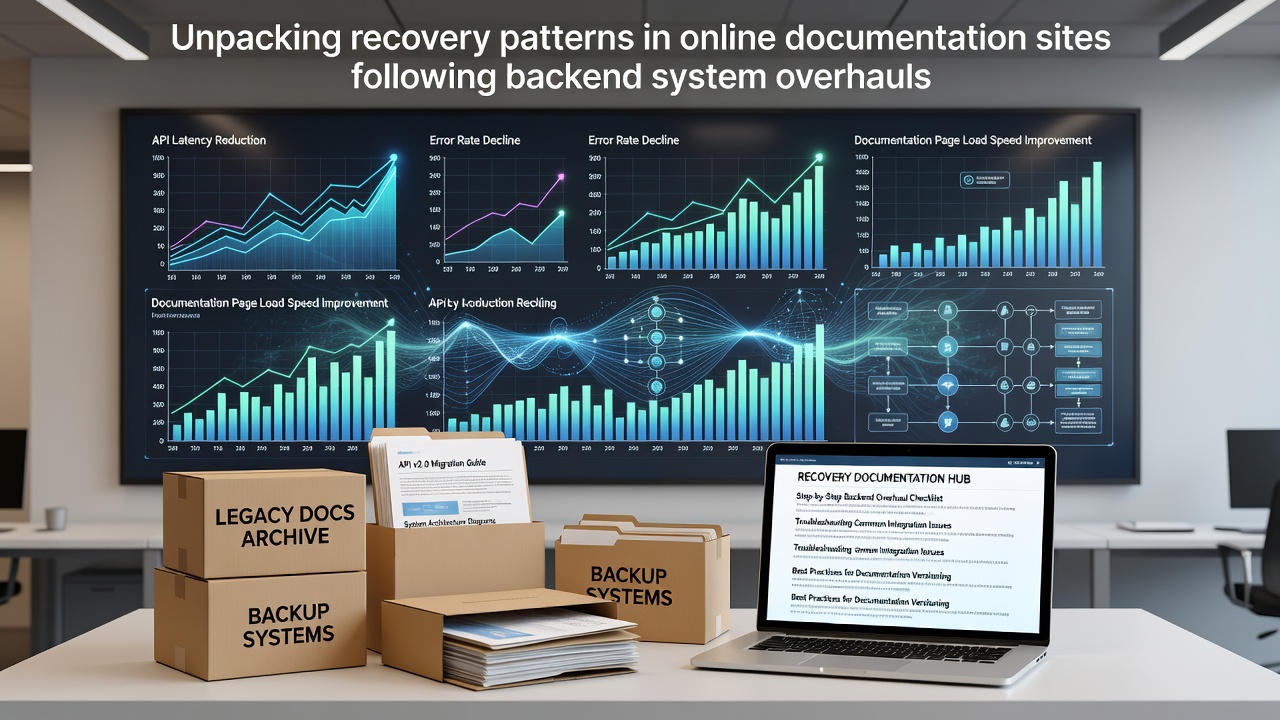
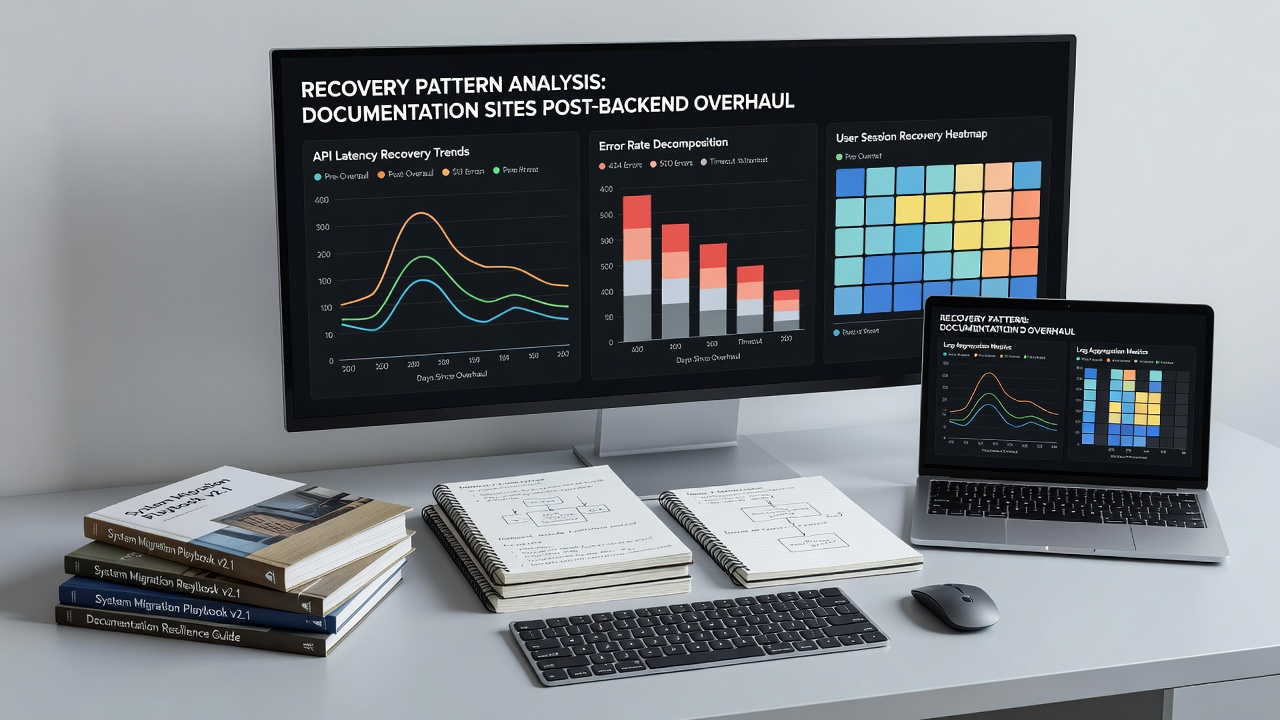
Analysts tracking documentation platforms note that traffic volume frequently declines sharply in the first 48 hours after an overhaul, then begins a gradual rebound once search engines reprocess updated sitemaps and recrawl affected URLs. Data collected through September 2026 from monitoring tools indicated that sites maintaining consistent URL structures during migration achieved 70 percent of pre-overhaul indexing levels within 30 days. Those introducing widespread URL changes without comprehensive redirects experienced slower rebounds, sometimes extending recovery timelines to four months or more. Observers note that pages with high internal link density tended to recover faster because crawlers followed established pathways back to refreshed content.
Factors that influence the pace of stabilization
Implementation quality plays a central role in how quickly documentation sites regain their prior visibility. Teams that performed extensive pre-migration testing of redirect chains and schema markup reported fewer errors in search console reports and faster reappearance in relevant queries. In contrast, incomplete handling of canonical tags or broken internal references prolonged recovery periods. A study published by researchers at the University of Toronto examined 45 documentation sites that underwent backend migrations and found that those prioritizing mobile responsiveness updates alongside backend work recovered user session durations to original levels more rapidly than sites that deferred such adjustments. External link profiles also contribute, since authoritative inbound references help search engines re-evaluate site authority during the post-migration period.
What's notable is the role of content freshness signals during these transitions. Documentation sites that published incremental updates or version notes shortly after the overhaul provided search engines with new material to index, which in turn accelerated re-crawling of related pages. Figures from web analytics platforms reveal that sites incorporating structured data enhancements during the overhaul saw improved rich result displays within six weeks, supporting higher click-through rates once traffic began returning.
Regional variations in recovery timelines
Documentation platforms serving different geographic audiences display distinct recovery behaviors tied to local infrastructure and regulatory environments. Sites focused on European users often align migration schedules with data protection compliance updates, which can introduce additional validation steps but also yield steadier long-term performance once completed. North American platforms, by comparison, frequently coordinate overhauls with seasonal release cycles of the software they document, resulting in recovery patterns that coincide with product update announcements. Australian government digital service reports highlight how public-sector documentation sites recovered more predictably when they published transparent migration timelines in advance, allowing users and crawlers to adapt without extended gaps in access.
Technical elements that support sustained recovery
Log file analysis after backend changes consistently shows that sites preserving historical crawl patterns through careful server configuration experience fewer spikes in error rates. Experts monitoring these environments emphasize the value of maintaining consistent response times across regions, since documentation users often access materials from multiple locations. One documented case involved a large open-source project whose documentation platform implemented progressive rollout of new backend components; this approach limited simultaneous disruptions and allowed teams to address issues in isolated sections before expanding changes site-wide. Such phased methods correlate with quicker restoration of average time-on-page metrics once full traffic resumed.
Conclusion
Recovery patterns in online documentation sites after backend overhauls follow repeatable sequences driven by redirect accuracy, content update timing, and crawl signal management. Data gathered through September 2026 confirms that sites applying structured testing and regional performance checks achieve stabilization within predictable windows, whereas rushed implementations extend those windows substantially. Continued monitoring of indexing reports and user behavior analytics remains essential for verifying that recovery has reached pre-overhaul benchmarks across all key documentation sections.