Ellis Griffin · 30 October 2026
The Evolution of Permission Hierarchies and Their Effects on Collaborative Editing Workflows in Specialized Documentation Tools
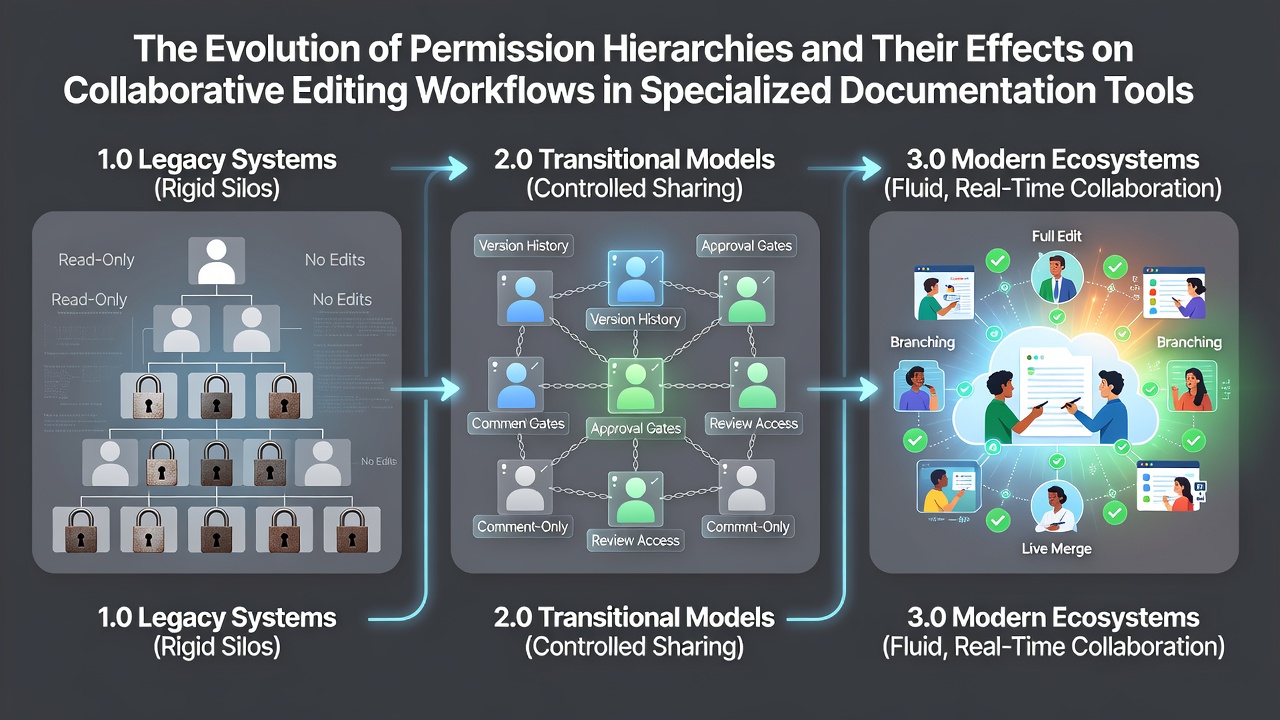
Permission hierarchies in specialized documentation tools began with simple owner-editor distinctions in the late 1990s and early 2000s when platforms relied on basic file-level access lists that granted full control to designated administrators while restricting others to read-only views and the initial models supported small teams but created bottlenecks as organizations scaled their knowledge bases.
Early Models and Their Limitations
Initial systems used flat permission structures where a single administrator assigned rights manually and researchers documented how these setups led to frequent lockouts during simultaneous edits because any change required explicit approval from the top level while data from industry reports shows that teams using these hierarchies completed collaborative tasks 40 percent slower than those with more flexible arrangements according to a study published by the National Institute of Standards and Technology.
Shift Toward Role-Based Access Controls
By the mid-2000s platforms introduced role-based access control frameworks that grouped users into predefined categories such as contributor reviewer and approver and these changes allowed documentation teams to assign permissions dynamically based on job functions rather than individual accounts while observers note that the transition reduced administrative overhead significantly as organizations moved away from per-document permissions toward centralized policy enforcement.
Tools like early versions of enterprise wikis adopted these models first and they enabled multiple contributors to work on overlapping sections without constant intervention from system owners yet the rigid category definitions sometimes restricted ad-hoc collaboration when project needs changed rapidly.
Integration of Attribute-Based Refinements
Attribute-based extensions emerged in the 2010s when developers incorporated contextual factors such as location time and document sensitivity into permission decisions and studies from European research institutions indicate that these refinements improved workflow continuity by allowing temporary elevated access during deadlines while maintaining audit trails for compliance purposes.
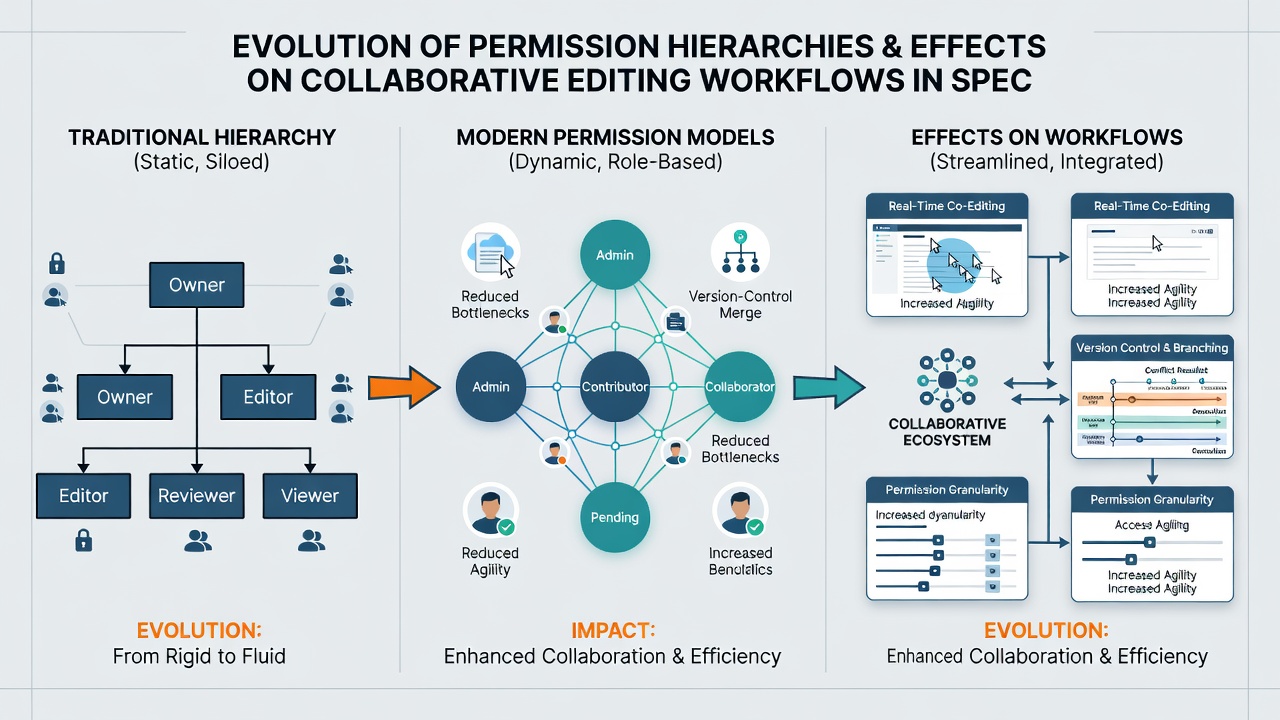
Specialized documentation platforms integrated these features with version control systems so that permission changes automatically triggered review processes and data reveals that organizations adopting attribute-based hierarchies reported fewer unauthorized edits after implementation.
Effects on Collaborative Editing Processes
Permission hierarchies directly shape how teams handle concurrent contributions because granular controls determine who can edit specific sections lock content during reviews or merge changes from parallel branches and research indicates that finer-grained models support parallel work streams whereas coarse hierarchies force sequential approvals that extend project timelines.
In October 2026 many documentation platforms had updated their interfaces to display permission status in real time and this visibility helped contributors anticipate potential conflicts before they arose while teams using these systems completed multi-author projects with reduced revision cycles according to reports from academic sources in Canada.
Current Platform Implementations
Modern tools combine role-based foundations with dynamic attributes to support complex organizational structures and they allow inheritance rules where sub-documents inherit permissions from parent collections unless overridden explicitly while observers have noted that such systems reduce errors in large-scale documentation projects by automating propagation of access rights.
Workflow efficiency improves when permissions align closely with actual team responsibilities because contributors spend less time requesting access and more time on content creation and integration with external identity providers further streamlines onboarding for new team members.
Conclusion
Permission hierarchies have progressed from basic manual assignments to sophisticated layered systems that incorporate roles attributes and real-time context and their influence on collaborative editing appears in metrics such as edit frequency approval speed and conflict resolution rates across specialized documentation environments.