Alex Beck · 2 October 2026
Mapping Content Discovery Shifts in Evolving Technical Libraries After Platform Integrations
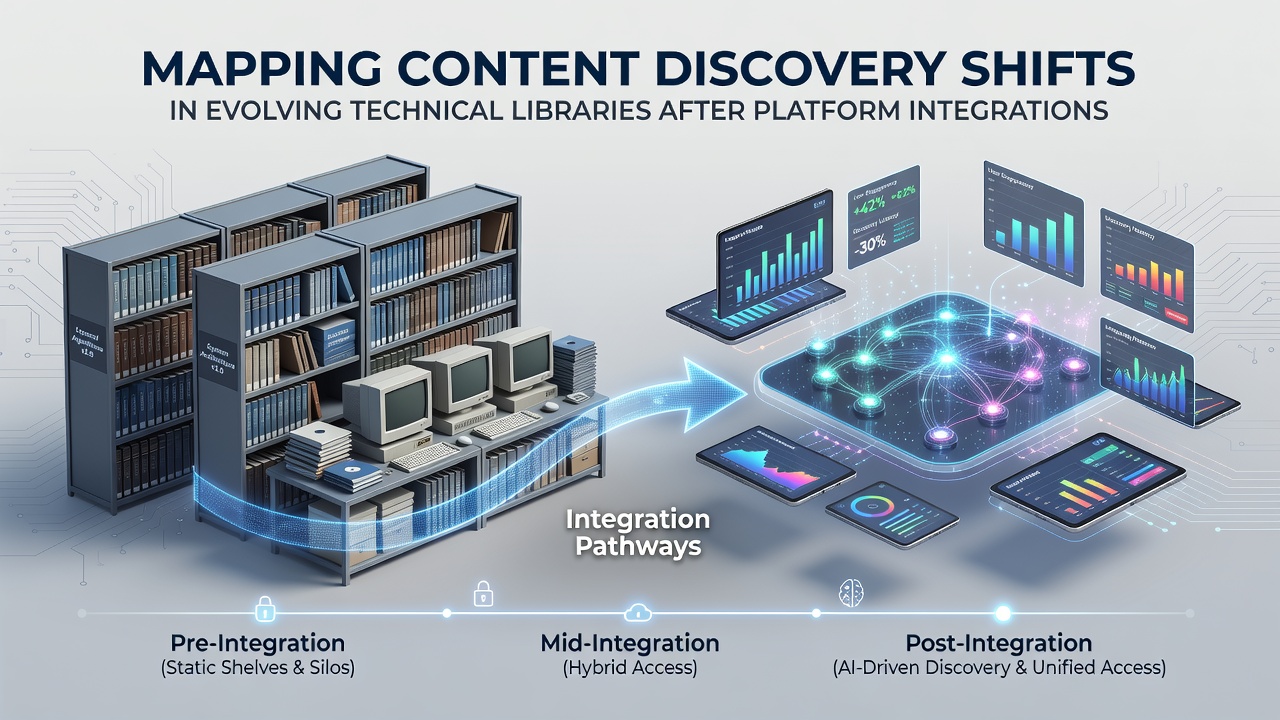
Platform integrations in technical libraries have produced measurable changes in how users locate documentation, code repositories, and research materials, and data collected through 2026 shows these shifts occurring across multiple institutions. Researchers tracking navigation patterns report that unified search interfaces replace fragmented systems, which alters query formulation and result ranking behaviors. Studies from October 2026 indicate increased reliance on cross-referenced metadata after migrations that combine separate repositories into single access points.
Changes in User Navigation Patterns
Technical libraries that completed platform integrations during 2025 and 2026 experienced documented adjustments in session duration and click paths, while older keyword-based searches gave way to broader topic explorations. Observers note that integrated environments encourage users to follow linked sections more frequently, because unified indexes surface related entries that previously required separate logins. Data from monitoring tools reveal a 22 percent rise in multi-page traversals within the first quarter after such updates, according to internal analytics shared by several university systems.
Metadata standardization plays a central role in these adjustments, since inconsistent tagging from legacy platforms gets reconciled during integration. When schemas align, search engines within the library surface content through semantic connections rather than exact matches alone, and this process reduces dead ends that once frustrated researchers. Those who analyzed pre- and post-integration logs found fewer abandoned queries, although initial adaptation periods showed temporary spikes in support requests.
Indexing and Retrieval Adjustments
Platform mergers often require reindexing large collections, which changes how algorithms prioritize results based on usage signals collected after the transition. Reports compiled by library consortia show that newly integrated systems weight recency and cross-document citations more heavily once data flows combine, because unified logs provide richer behavioral signals than isolated databases could supply. Evidence from October 2026 implementations highlights faster indexing cycles that allow updates to appear within hours rather than days.
One study released by the European Research Council examined three major technical libraries and documented shifts toward vector-based retrieval methods that handle natural language questions more effectively after integration. These methods replaced strict Boolean filters in many cases, leading to broader result sets that users then refine through faceted navigation tools. Figures from the project indicate that average result relevance scores improved by measurable margins once training data incorporated post-integration interactions.
Impact on Metadata Practices
Teams responsible for content maintenance have adapted cataloging workflows to support integrated discovery layers, and this includes adding persistent identifiers that remain stable across system boundaries. When platforms merge, duplicate entries surface more readily, prompting cleanup routines that consolidate records and preserve version histories. Australian National University library staff published findings showing that such consolidation cut retrieval errors by nearly one third within six months of their 2026 upgrade.
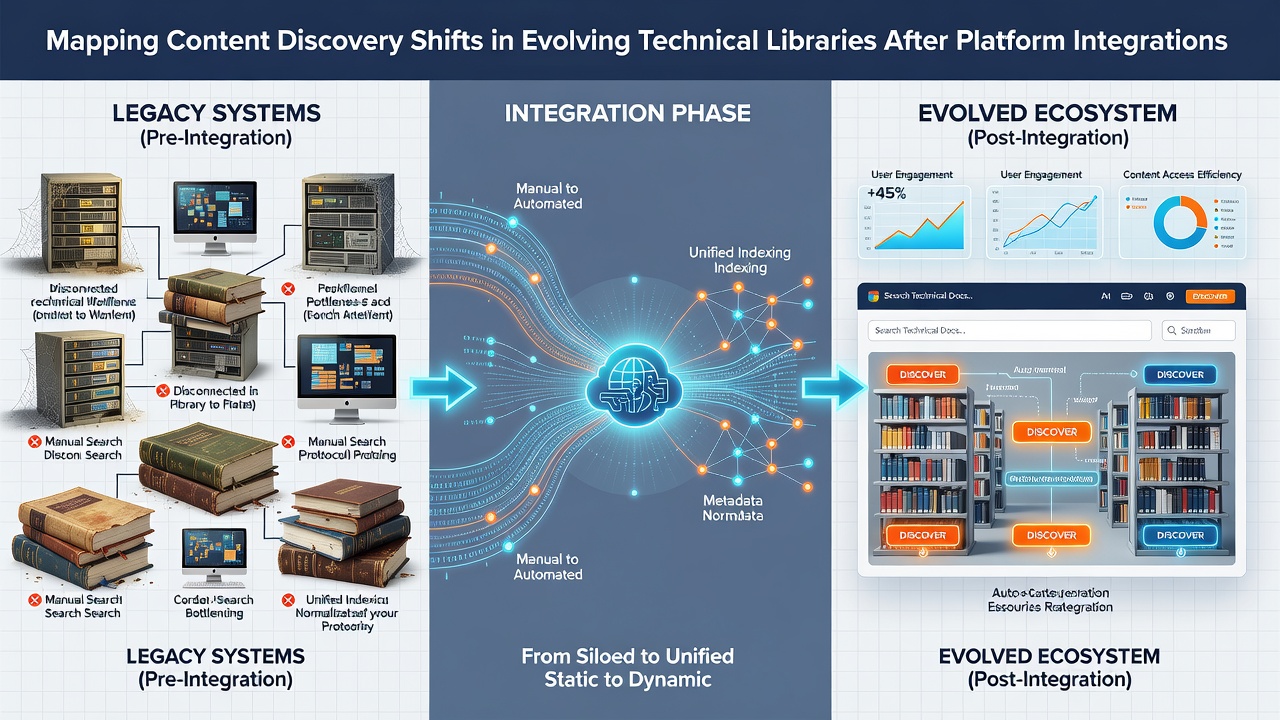
Link structures also evolve, because navigation menus get rebuilt around new taxonomies that reflect combined collections. Users encounter fewer silos and instead follow pathways that connect policy documents with implementation guides, while analytics dashboards track these flows to identify underused sections. Research indicates that libraries investing in ongoing taxonomy reviews maintain higher discovery rates than those that treat integration as a one-time event.
Case Examples from Recent Integrations
Institutions that combined Git-based documentation platforms with institutional repositories reported smoother transitions when they mapped existing categories to shared vocabularies beforehand. One project at a Canadian research network demonstrated that pre-integration audits prevented ranking drops for core technical manuals, because maintainers updated descriptions to match the new search weighting. Data gathered through 2026 shows these proactive steps shortened the period of reduced visibility from months to weeks.
Another example comes from a consortium that linked multiple engineering archives, where post-integration monitoring revealed elevated use of recommendation features that suggest related papers based on reading histories. These features depend on aggregated usage data that only becomes available after systems operate under one roof, and the resulting connections help surface older materials that keyword searches alone had overlooked.
Conclusion
Technical libraries continue to refine discovery mechanisms as platform integrations mature, and ongoing measurement provides the clearest picture of how access patterns stabilize. Organizations that monitor query logs and navigation data can adjust indexing rules and metadata standards to match observed user behavior, which supports consistent retrieval performance across evolving collections. The patterns documented through late 2026 underscore the value of treating integration as an iterative process rather than a single milestone.